
HAIRTWO Journal ·
Scalp Serum for Thinning Hair: What Works and How to Use
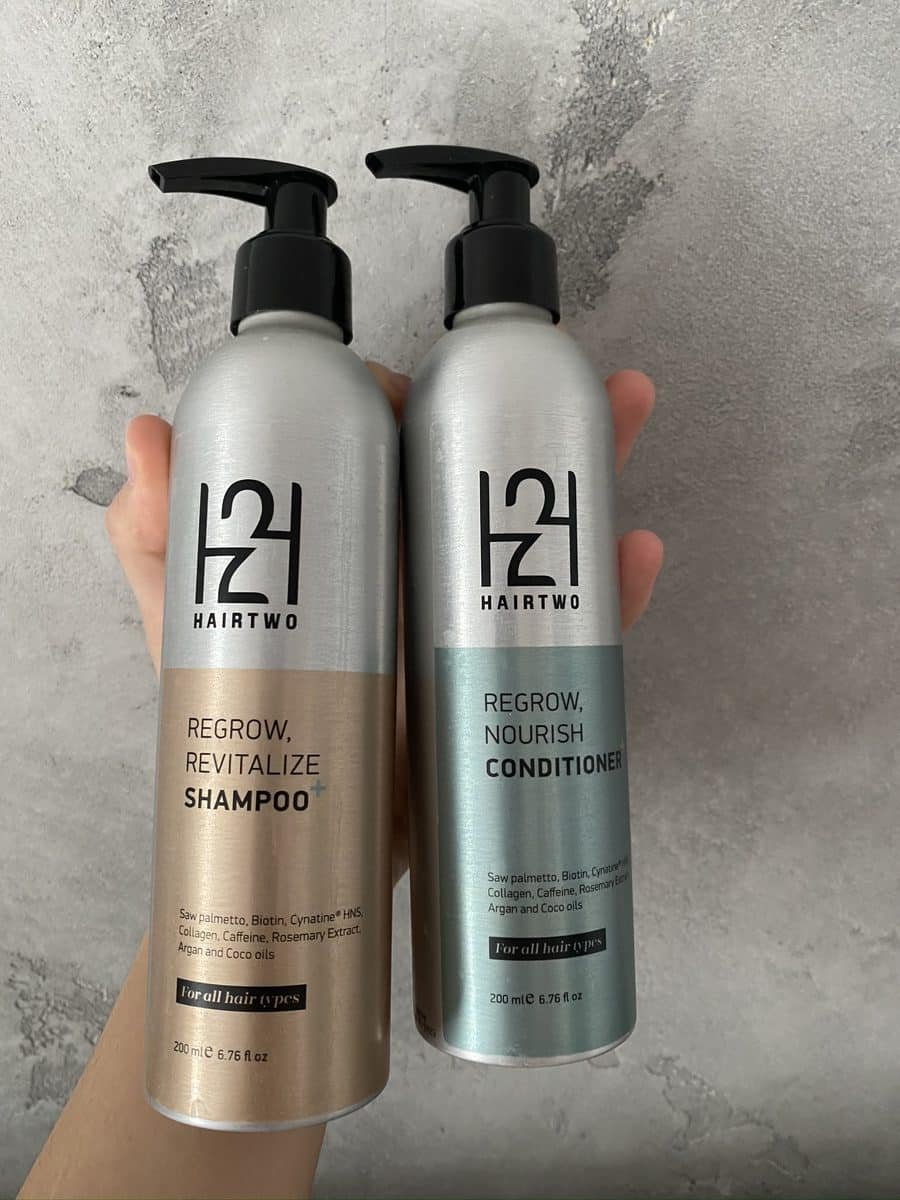
A scalp serum for thinning hair is a leave-in product you apply straight to the scalp, and most are cosmetic scalp care: they can keep the scalp comfortable and help hair look fuller, but they are not medicines. The only over-the-counter option with strong evidence for regrowth in female pattern hair loss is minoxidil, which is a medicine, so talk to your pharmacist or GP about it. Below is how to judge the evidence, read a label and use a serum properly.
What a scalp serum is (and what it is not)
Most products sold as a scalp serum are cosmetics. They are designed to sit on the scalp after washing, usually as a light liquid, and they are judged on how they feel, how easy they are to apply and whether they leave hair greasy. Because they are cosmetics, the honest ones talk about scalp care and hair that looks thicker, not about treating hair loss.
Minoxidil is different. DermNet describes it as a medicine available as 2% and 5% solutions, and notes that you need to use it for at least six months before the benefit can be assessed. It is used long term, and you should not stop it without talking to your doctor. Some products blend the two worlds in their marketing, so check whether a serum lists minoxidil as an active ingredient or not.
It also helps to know what you are dealing with. The HSE describes female pattern hair loss as thinning on the crown of the head and lists it among the lasting types of hair loss, while shedding after illness or stress often settles within a few months. If your parting looks wider each year, that gradual change is worth mentioning to your GP.
Do scalp serums work? What the evidence says
It depends on the ingredient and what you mean by “work”. Here is what the research we checked actually shows:
- Minoxidil: the best-studied topical option for pattern hair loss. Even so, DermNet says the main aim is to slow or stop the progression of hair loss, and that results vary from woman to woman.
- Caffeine: a 2025 systematic review found nine clinical trials, all favouring topical caffeine, but rated the evidence very low in five of them. Most trials were open-label without proper controls, only two were randomised and double-blind, and just 30 of the 684 participants were women. The authors called for better-designed trials.
- Rosemary oil: often quoted as being “as good as minoxidil”. That claim comes from one six-month trial of 100 people with androgenetic alopecia, comparing rosemary oil with 2% minoxidil. Hair counts rose in both groups with no significant difference between them. It was single-blind, with no placebo group, and it is listed as a study in men, so it tells you little about women.
- Peptides, plant extracts and the rest: treat these with the same caution. Look for whether the brand points to human studies, in women, with a comparison group. A lab test on cells is not the same thing.
So, do scalp serums work? A cosmetic serum can be a pleasant part of looking after your scalp, but you should not expect one to reverse thinning. The HSE puts it plainly: no treatment is 100% effective, and there is no shampoo that will help your hair regrow.
How to choose the best scalp serum for thinning hair
There is no single best scalp serum for thinning hair women can buy, because it depends on your scalp and your goal. Run through this checklist before you buy:
- Is it a medicine or a cosmetic? If it contains minoxidil, it is a medicine with its own instructions and side effects, so ask a pharmacist first.
- Read the claims. “Supports a healthy-looking scalp” is a cosmetic claim. “Clinically proven to regrow hair” on a cosmetic should make you ask: proven in whom, against what?
- Check the ingredient list. See where the headline active actually appears, and note any fragrance or essential oils if your scalp is sensitive.
- Texture. A lightweight scalp serum that dries quickly is easier to use daily, especially on fine hair that goes flat with oils.
- Application. A dropper or nozzle lets you reach the scalp, not just the hair.
- Cost per month. Divide the price by how many weeks the bottle lasts at the recommended dose. A cheaper bottle that runs out in three weeks can cost more than a pricier one that lasts six.
- Returns. Any serum needs months of use before you can judge it, so a long return window matters.
How to use scalp serum properly
How you apply it matters as much as what is in the bottle. A simple daily routine:
- Patch test first. Try a small amount on a small patch of skin, as the pack directs, before using it on your whole scalp.
- Start on a clean scalp. Apply to a towel-dried or dry scalp, as the pack directs, not over a layer of dry shampoo or styling product.
- Work parting by parting. Make a parting, apply a few drops along it, then move about 1–2 cm across and repeat over the area where hair looks thinner.
- Use the stated amount. More product does not mean better results, and too much can leave roots greasy.
- Massage gently. Use your fingertips, not your nails, for a minute or two.
- Be consistent. Use it at the same time each day so it becomes a habit, and stop if you get redness, itching or soreness.
If you use a scalp roller as well, keep the two steps sensible and gentle. Our guide on how to use a 0.5 mm scalp roller safely covers hygiene and how often to use it.
A realistic timeline
Scalp hair grows about one centimetre a month during its growth phase, according to DermNet. That means any change in how your hair looks takes months, not weeks, to show. Even minoxidil needs at least six months before it can be judged. Take a photo of your parting in the same light every month, because day-to-day you will not notice slow changes either way.
When to see your GP
A scalp serum is not a substitute for finding out why your hair is thinning. The HSE advises seeing a GP if:
- you have sudden hair loss
- you are losing hair in clumps
- areas of hair loss are itchy or sore
- you are worried about your hair loss
Patchy or heavy shedding should always be checked by a doctor or dermatologist. Your GP may also suggest blood tests for thinning hair.
FAQ: scalp serums for thinning hair
Do scalp serums work for thinning hair?
Cosmetic scalp serums can keep your scalp comfortable and help hair look fuller, but they are not proven to regrow hair. Evidence for ingredients like caffeine and rosemary is limited. Minoxidil, a medicine, has the strongest evidence for female pattern hair loss, so ask your pharmacist or GP whether it suits you.
What is the best scalp serum for thinning hair?
There is no single best one. Choose a lightweight serum you will happily use every day, with honest claims, a clear ingredient list, a dropper that reaches the scalp and a fair cost per month. If your goal is regrowth rather than scalp care, speak to a pharmacist or GP about minoxidil.
What serum is best for thinning hair?
For regrowth, the over-the-counter option with strong evidence is minoxidil, which is a medicine with its own side effects and long-term commitment. For everyday scalp care, pick a cosmetic serum that suits your scalp and does not weigh fine hair down. Patch test first, and stop if it irritates.
What is the best hair growth serum for thin hair?
Be wary of the phrase “hair growth serum” on a cosmetic. The topical product with the strongest evidence is minoxidil, and even then DermNet says results vary and you need at least six months to judge. Your GP can check for other causes first.
Where a gentle routine fits in
If your GP has ruled out other causes, or your hair simply looks thinner than it used to, daily scalp care is something you can control. HAIRTWO is a 4-step routine made in France for women whose hair looks thinner, often from their mid-40s, around menopause or after a stressful time:
- Sulfate-free shampoo cleans the scalp gently so the serum goes onto a clean base.
- Conditioner goes on the lengths to keep fine hair soft and easier to style.
- Leave-in scalp serum with Capilia Longa™ is applied parting by parting as daily cosmetic scalp care.
- 0.5 mm titanium scalp roller adds a gentle massage step, used as the guide above describes.
It is cosmetic care, not a treatment, and it will not regrow hair. One kit lasts about 45 days, and you can see the HAIRTWO hair routine kit with its 150-day money-back guarantee, which gives you time to judge it properly. If you have sudden, patchy or heavy shedding, see your GP first.
Sources
- HSE: Hair loss
- DermNet: Female pattern hair loss
- Caffeine as an active ingredient in cosmetic preparations against hair loss: a systematic review (2025)
- Rosemary oil vs minoxidil 2% for androgenetic alopecia: a randomised comparative trial (2015)
Written by the HAIRTWO team with the help of AI tools and checked against the sources above. General information, not medical advice.