
HAIRTWO Journal ·
Widening Part in Women: Causes, Checks and Styling
A widening part in women is often an early sign of female pattern hair loss, where hair along the centre parting gradually thins while the front hairline often stays where it was. It is not the only explanation, though: stress, illness, weight loss and low iron can also make hair shed more. The useful first step is an honest check at home, followed by a conversation with your GP if anything looks like it is changing.
What a widening parting can mean
Female pattern hair loss
The British Association of Dermatologists describes female pattern hair loss as gradual thinning in which the mid part line becomes more visible and widened, while the hairline at the front of the scalp often remains normal. It usually begins in the 50s or 60s, but it can start in the 30s or 40s. The American Academy of Dermatology lists the same early clues: a parting that gets wider, and a ponytail that feels thinner than it used to.
Shedding from stress, illness or low iron
Not every change at the parting is pattern hair loss. The NHS and HSE both list temporary causes of hair loss, including illness, stress, weight loss and iron deficiency. This kind of shedding can make your whole head of hair look thinner, and the parting is simply where you notice it first, because that is where you see your scalp most clearly.
Why the cause matters
Other types of hair loss can look similar, which is why the AAD recommends having a dermatologist confirm the diagnosis. Guessing from a mirror is not enough.
How to check your parting honestly at home
A parting that looks wider one morning and fine the next is often down to lighting, wet hair or a fresh wash. The NHS notes that losing 50 to 100 hairs a day is normal, so a few hairs in your brush are not a reason to panic. What matters is a change over months. To see it clearly, make your photos comparable:
- Same light every time. Stand in the same spot, ideally facing a window in daylight. Overhead bathroom lights make almost any scalp look thinner.
- Same hair state. Take photos on the same day of your wash cycle, with hair fully dry and no styling products.
- Same parting. Comb a straight centre parting from the front hairline back towards the crown.
- Same distance and angle. Ask someone to photograph the top of your head from directly above, or use a phone timer and hold it at arm’s length.
- Add a reference. Hold a ruler or a coin next to the parting so you can compare its width between photos.
- Once a month, not once a day. Hair changes slowly. Daily checking mostly creates worry; a monthly photo shows the real trend.
After three or four photos, compare the first and the latest side by side. Note whether the parting itself looks wider, whether the scalp shows more beside it, and whether your ponytail feels thinner. Write down anything else that changed in that period, such as illness, a stressful event, new medication or a big change in diet. That record is exactly what a doctor will want to hear about.
Styling tricks for hair that looks thinner at the parting
None of these change your hair, but they can make a parting much less noticeable while you work out what is going on:
- Move your parting. Shifting it a centimetre or two to the side, or switching sides, puts hair that has been lying flat on top of the area you were worried about.
- Try a zigzag parting. A loose zigzag drawn with the end of a comb breaks up the straight line of visible scalp.
- Lift at the root. Blow-dry the hair against the direction it normally falls, then flip it back. Hair that sits up from the scalp covers more of it.
- Go lighter on products. Heavy oils and rich creams near the roots can make hair separate into strands and show more scalp.
- Ask about layers. A hairdresser can add layers or take off some length so the hair is less weighed down at the top.
- Use colour-matched camouflage. The BAD mentions coloured spray camouflage as a way to cover thinning areas of the scalp. Choose a shade close to your roots.
When to see a GP or dermatologist
The HSE advises seeing a GP if you have sudden hair loss, are losing hair in clumps, have areas of hair loss that are itchy or sore, or are simply worried. The NHS also notes that a GP may be able to tell the cause by looking at your hair. If your shedding is sudden, patchy or heavy, book an appointment rather than waiting to see whether a routine helps.
What to ask your GP
- Does this look like female pattern hair loss, shedding, or something else?
- Could any of my medicines, or a recent illness, be playing a part?
- Would blood tests be useful in my case, for example for iron or thyroid function?
- Would it make sense to see a dermatologist to confirm the diagnosis?
- Which treatments are suitable for me, and which are available on the NHS? (The NHS notes that not all hair loss treatments are, so you may have to pay.)
- Who can I talk to if this is affecting how I feel?
Bring your monthly photos and your notes. They turn “I think it’s thinner” into something your doctor can actually look at. Hair loss can have a real emotional impact, and the BAD encourages raising this with a healthcare professional too.
Where a gentle routine fits in
A scalp care routine does not replace a diagnosis, and it will not treat hair loss. What it can do is make your daily care kinder and more consistent while you follow up with your doctor. If your parting started to change around menopause, our guide to thinning hair after menopause compares several routines.
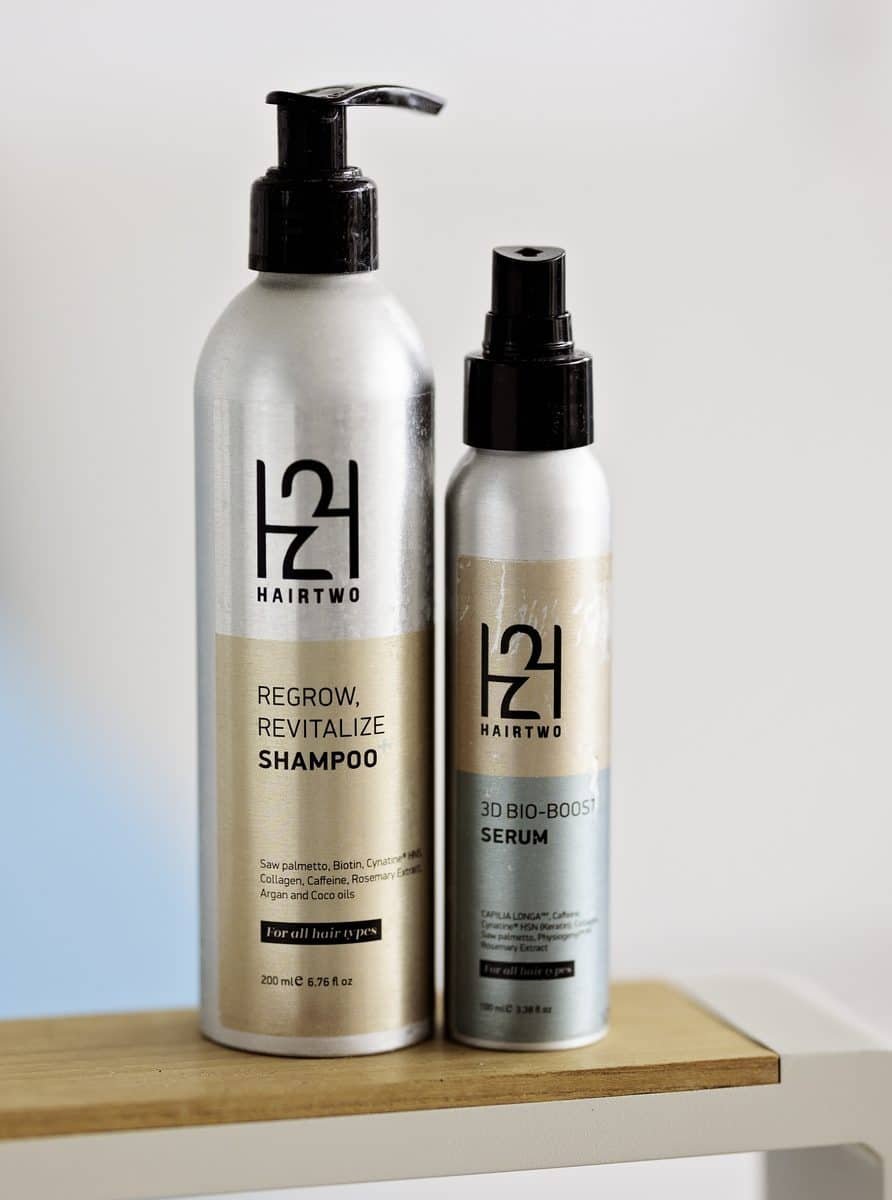
The HAIRTWO 4-step hair routine kit is made for women whose hair looks thinner: a sulfate-free shampoo, a conditioner, a leave-in scalp serum with Capilia Longa™ and a 0.5 mm titanium scalp roller. It is made in France by Laboratoire Prevost and one kit lasts about 45 days. It comes with a 150-day money-back guarantee, which matters because hair changes slowly and a routine needs time to be judged fairly. Keep taking your monthly photos in the same light; they are the most honest way to judge any routine.
Sources
- British Association of Dermatologists: Hair loss, female pattern (androgenetic alopecia)
- American Academy of Dermatology: Female pattern hair loss
- NHS: Hair loss
- HSE Ireland: Hair loss
Written by the HAIRTWO team with the help of AI tools and checked against the sources above. General information, not medical advice.