HAIRTWO Journal ·
How to Make Thin Hair Look Thicker: An Honest Guide
If you want to know how to make thin hair look thicker, the honest answer is this: styling can’t add hairs or make each strand wider, but it can change how much scalp shows and how much body your hair has. A cut with blunt ends, gentle washing, lift at the roots, a softer colour contrast and dropping a few damaging habits will make the biggest visible difference.
Below: a wash-to-style routine, a hairdresser checklist, colour tips, and when to see your GP instead of buying another product.
First, is your hair thin by nature, or newly thinning?
Some women have always had fine hair. Others notice a change: more hair in the brush, a smaller ponytail, more scalp at the parting. The HSE notes that losing between 50 and 100 hairs a day is normal, and that some thinning is a normal part of getting older. It also lists shedding linked to illness, stress, weight loss, iron deficiency or having a baby.
If it’s a recent change, use the styling tips, but also read the GP section below. You may find our guide to blood tests to ask your GP about useful too.
How to make thin hair look thicker: a step-by-step routine
The aim: clean roots, light lengths and as little rough handling as possible.
1. Wash the scalp, not the lengths
The American Academy of Dermatology (AAD) advises gently massaging shampoo into the scalp only and letting the rinse water carry the suds through the rest. Clean roots sit higher than oily, product-heavy ones.
2. Condition every time, but keep it light
The AAD recommends conditioner after every shampoo. With fine hair, apply it from mid-lengths to ends and keep it off the roots so they don’t go flat. Rinse well.
3. Blot, don’t rub
Rubbing wet hair with a towel is one of the habits the AAD lists as damaging. Wrap your hair in a towel to soak up the water instead. If your hair is straight, let it dry a little before combing, then use a wide-tooth comb gently. Don’t brush hard while it’s soaking wet.
4. Dry for lift, with less heat
The AAD suggests air-drying when you can, using the lowest heat setting and limiting how often and how long heat touches your hair. A practical compromise: let your hair air-dry most of the way, then use a low or cool setting just at the roots, lifting sections up and away from the scalp. Drying your parting over to the opposite side first also adds height.
5. Style with less, not more
Heavy creams and oils tend to flatten fine hair, and the AAD suggests choosing styles that don’t need strong-hold products. A little light product at the roots does more than a lot all over. Brush only as much as you need to style: the AAD calls the 100-strokes-a-day idea a myth.
Habits that make thin hair look thinner
- Tight ponytails, buns and up-dos. The AAD warns that constant pulling can cause traction alopecia, a type of hair loss. Wear your hair loosely pulled back and use covered bands made for hair. If a style hurts, it’s too tight.
- Too much heat. The AAD lists frequent heat styling among habits that damage hair.
- Harsh towelling and tugging. Remove tangles gently; broken ends make hair look sparser.
- Stacking chemical services. The AAD advises having only one service (colour, perm or relaxer) at a time and leaving more time between touch-ups.
The best haircut for thin hair: tell your hairdresser
There’s no single best haircut for thin hair, but a few principles help most women. Bring this checklist to your next appointment:
- “My hair is fine and I’d like it to look fuller. I’m happy to lose some length if it helps.”
- Ask for blunt or softly blunt ends rather than heavy thinning or razoring, so the ends look denser.
- Ask whether a shorter length, such as a bob around the jaw or collarbone, would suit you. Shorter hair weighs less and holds lift at the roots more easily.
- Ask for light, face-framing layers rather than lots of short choppy layers that can make the ends look wispy.
- Ask them to show you where your parting looks fullest. A slightly off-centre or zigzag parting often shows less scalp than a sharp centre line.
- Mention any area where you see more scalp, so they can cut and style around it.
- Ask how to dry it at home with minimal heat.
If the parting is your main worry, our article on the widening part in women covers checks and styling in more detail.
How to make thin hair look thicker with colour
Colour can help, mainly by reducing contrast. When hair is much darker than the scalp, every gap shows. Softening that contrast, for example with gentle highlights or lowlights near the parting, can make the scalp less noticeable. Dermatology resources such as DermNet list coloured hair sprays for exactly this purpose: covering thinning areas on the scalp.
To protect fine hair while you colour it, follow the AAD’s advice:
- Stay within three shades of your natural colour. Going lighter by more than that needs stronger peroxide.
- Going darker is generally gentler on hair than going lighter.
- Do a patch test with home colour. Redness, swelling, burning or itching means stop and get it checked.
- Protect coloured hair from the sun with a wide-brimmed hat.
When to see your GP
Styling is cosmetic. It won’t tell you why hair is changing. The HSE advises seeing a GP if you have:
- sudden hair loss
- hair coming out in clumps
- patches of hair loss that are itchy or sore
- any hair loss you’re worried about
New thinning after illness, stress or a big life change is also worth mentioning.
FAQ
How can I thicken naturally thin hair?
You can’t change the number of hairs you have or the width of each strand with styling or products. What you can change is how full it looks: a blunt cut, light conditioner on the ends only, lift at the roots, less heat and softer colour contrast. If the thinning is new, see your GP.
Can you turn thin hair to thick hair?
Not with styling. Haircuts, colour and products change how your hair looks and moves, not how many hairs grow. Fine hair can still look much fuller with the right cut and routine. If your hair has recently become thinner, the HSE suggests seeing a GP, especially if loss is sudden or in clumps.
What is the best hairstyle for very thin hair?
Usually a shorter cut with blunt ends, such as a bob around the jaw or collarbone, with only light layers. It weighs less, so the roots lift more easily, and blunt ends look denser. Avoid tight ponytails and buns, which the AAD links to traction alopecia. A good hairdresser can tailor it to your face.
Does hair colour make thin hair look thicker?
It can. Reducing the contrast between hair and scalp makes gaps less noticeable, and soft highlights or lowlights add dimension. Colour carefully: the AAD suggests staying within three shades of your natural colour and patch testing home dye first, since damaged fine hair breaks more easily and looks thinner.
Where a gentle routine fits in
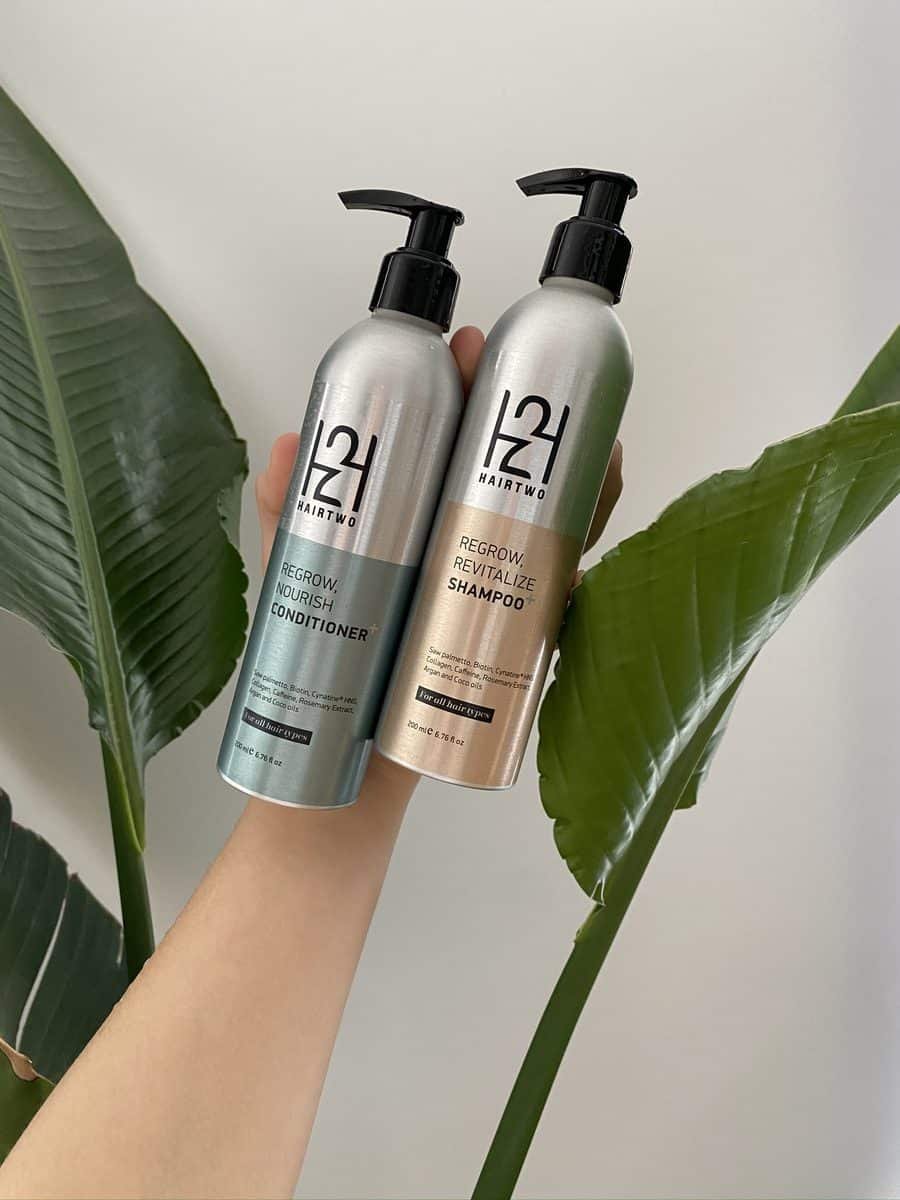
None of this needs a cupboard full of products, just the basics done consistently. That’s the idea behind the HAIRTWO routine: four steps in one kit (a sulfate-free shampoo, a conditioner, a leave-in scalp serum with Capilia Longa™ and a 0.5 mm titanium scalp roller), made in France by Laboratoire Prevost. It’s a scalp-care routine for hair that looks thinner, not a treatment, and it won’t replace a GP visit if something has changed. One kit lasts about 45 days, and because hair changes slowly, you have 150 days to decide if you’re happy with how your hair looks, or get your money back. You can see what’s in the HAIRTWO kit here.
Sources
- HSE: Hair loss
- American Academy of Dermatology: 10 hair care habits that can damage your hair
- American Academy of Dermatology: Colouring and perming tips
- DermNet: Female pattern hair loss
Written by the HAIRTWO team with the help of AI tools and checked against the sources above. General information, not medical advice.